Understanding Echolalia in Autism: A Parent's Guide to Communication and ABA Support

In short: Echolalia is the repetition of words or phrases, often used by autistic individuals to process language, regulate emotions, or communicate. It is not just 'copying' but can be a functional step toward meaningful speech. ABA therapy, especially when led by a BCBA, can help expand echolalic communication into flexible, functional language.
Key takeaways
- Echolalia is a natural part of many autistic children's language development and can serve various purposes.
- Immediate echolalia (repeating right away) and delayed echolalia (repeating later) are both common forms.
- Echolalia is not meaningless; it often carries communicative intent and emotional regulation functions.
- ABA therapy with a BCBA can use echolalia as a foundation to teach functional language.
What Is Echolalia?
Echolalia is the repetition of words, phrases, or sounds that a person has heard from others or from media. It is a common feature of autism spectrum disorder, especially in early childhood. Echolalia can be immediate, where the person repeats what was just said, or delayed, where the repetition occurs hours, days, or even weeks later. For many autistic individuals, echolalia is not simply a meaningless behavior -- it often serves as a stepping stone in language development and a way to communicate or self-regulate.
Types of Echolalia
- Immediate echolalia: Repeating something right after hearing it. For example, if a parent says 'Do you want water?' the child replies 'Do you want water?' instead of answering directly.
- Delayed echolalia: Repeating phrases from memory, such as lines from a TV show, a favorite book, or something a parent said days ago. The repetition may seem out of context but often carries meaning for the child.
- Mitigated echolalia: Slight variations of repeated phrases that show emerging flexibility, like changing a pronoun or adding a word.
Both types are part of a continuum of language processing and can be supported through targeted therapy.

🔗 Related reading: Respite Care for Autistic Children in California: A Guide · Find ABA Near Me
Why Do Autistic Individuals Use Echolalia?
Echolalia serves many functions. Research and clinical observation show that autistic children use echolalia to:
- Process language: Repeating helps them decode the sounds and structure of speech.
- Communicate intent: A delayed line from a cartoon might express excitement, fear, or a request.
- Self-regulate: Repetition can be calming when feeling overwhelmed or anxious.
- Practice speech: It allows a safe, predictable way to try out words and intonation.
- Initiate or maintain interaction: Reciting a familiar script can be a bridge to joining a conversation.
Understanding the function behind echolalia is crucial for parents and professionals. It transforms what may look like 'just copying' into a meaningful communication attempt.
Echolalia as a Stage of Language Development
For many autistic children, echolalia is not a permanent communication pattern. It often appears during early language learning and, with appropriate support, evolves into more flexible, generative language. This developmental path can be similar to how typically developing children babble and experiment with sounds before forming words. The key difference is that autistic children may rely more heavily on repeating whole units of speech before breaking them down.
The Role of Gestalt Language Processing
Many autistic children are 'gestalt language processors' -- they learn language in large chunks (scripts) rather than single words. Echolalia is a natural expression of this processing style. Over time, with intervention, they begin to 'mitigate' those chunks, rearranging words and applying them in new ways. Recognizing this can help parents and therapists choose the most effective communication strategies.

🔗 Related reading: Autism Support Groups for California Parents · Local ABA Therapy
Common Misconceptions About Echolalia
Misunderstanding echolalia can lead to frustration or missed opportunities for connection. Here are a few myths and the facts:
- Myth: Echolalia is meaningless or just 'stimming.' Fact: While echolalia can be self-stimulatory, it often has communicative, emotional, or cognitive purpose.
- Myth: You should always stop echolalia immediately. Fact: Attempting to suppress echolalia without understanding its function can increase anxiety and hinder communication development.
- Myth: Only nonverbal children use echolalia. Fact: Many verbal autistic individuals continue to use echolalia, especially when stressed or excited.
- Myth: Echolalia prevents learning language. Fact: When supported correctly, echolalia can be a bridge to original, flexible speech.
How ABA Therapy Addresses Echolalia
Applied Behavior Analysis (ABA) therapy, led by a Board Certified Behavior Analyst (BCBA), is one of the most evidence-based approaches for supporting language development in autism. ABA does not aim to eliminate echolalia but rather to shape it into functional communication. A BCBA will conduct a functional assessment to determine why the child uses echolalia -- is it to request, protest, or self-calm? Then they design individualized strategies.
ABA Techniques for Echolalia
- Modeling correct responses: The therapist models a brief, appropriate phrase and prompts the child to imitate it, gradually fading the prompt.
- Script fading: If the child uses a script (e.g., 'Do you want a cookie?' to request a cookie), the therapist teaches a shorter version like 'cookie' and then expands.
- Natural environment teaching: Embedding language learning into play and daily routines to make communication more motivating and meaningful.
- Parent training: BCBAs coach parents on how to respond to echolalia at home, turning repetition into conversation.
Importantly, ABA respects the child's current communication method. A skilled BCBA will also collaborate with speech-language pathologists when needed to ensure a holistic approach.
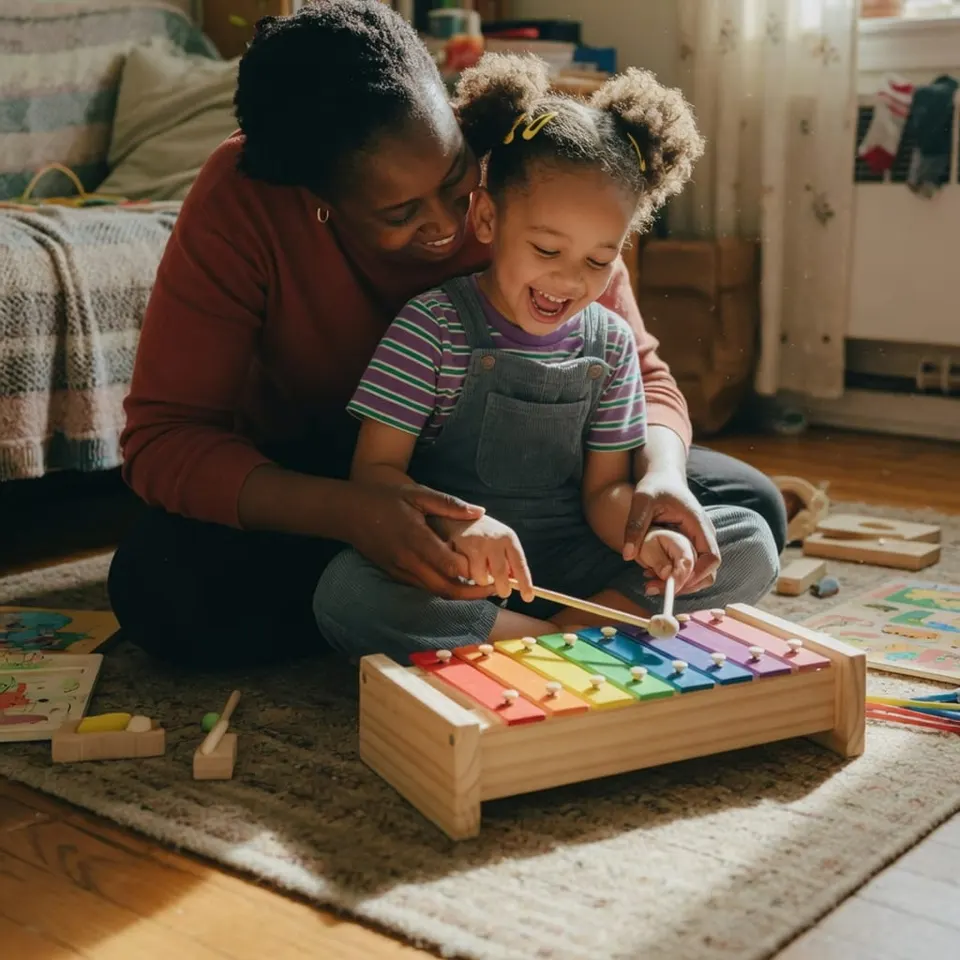
Practical Tips for Families
You don't need a therapist to start supporting your child's echolalia in positive ways. Small adjustments at home can make a big difference.
- Observe first: Keep a log of when and how your child uses echolalia. Look for patterns -- does it happen during transitions, when excited, or when asked a question?
- Respond meaningfully: If your child repeats your question, try answering it yourself or modeling a simple answer. For delayed echolalia, acknowledge it: 'Oh, that's from your favorite show! Are you feeling excited?'
- Use simple, consistent language: Short phrases help your child learn to break down speech. Pair words with gestures or pictures.
- Incorporate preferred interests: If your child often repeats a movie line, use that interest to create communication opportunities. For example, offer a choice between two items using phrasing from the show.
- Be patient: Language development takes time. Celebrate every small step toward flexible speech.
When to Seek Professional Help and How Apply for ABA Can Help
If your child's echolalia is interfering with their ability to communicate basic needs, causing frustration, or preventing social connection, professional support can be invaluable. A BCBA can assess your child's unique communication profile and design a program that builds on their strengths. Early intervention is key -- the earlier language is supported, the more likely a child will develop fluent speech.
Apply for ABA is a free service that connects families with vetted, BCBA-led ABA therapy providers in their area. We help you navigate insurance coverage, including many state Medicaid programs and private insurance plans that cover ABA as a medically necessary therapy for autism. Whether your child uses immediate or delayed echolalia, we can find a provider experienced in supporting gestalt language processors and functional communication. Simply visit applyforaba.com and start your search today. There is no cost to families.
The Importance of Person-First and Neurodiversity-Affirming Language
Throughout this article, we have used person-first language ('child with autism') and identity-first language ('autistic individual') interchangeably, respecting that different families and self-advocates have varying preferences. The most important thing is to approach echolalia with understanding and respect. It is not a problem to fix, but a difference to work with. By viewing echolalia as a valid form of communication, you build trust and create a environment where your child feels heard. ABA therapy, when delivered compassionately, can honor that difference while expanding communication options.
If you have questions about echolalia and ABA, or want to find a BCBA-led provider who truly understands your child's communication style, Apply for ABA is here to help. We believe every child deserves a voice -- and every family deserves support.