Your 2-Year-Old Isn't Pointing? Here's What to Do Next

In short: Pointing is a key developmental milestone that usually emerges between 12 and 18 months. If your 2-year-old isn't pointing, it could be a normal variation, but it may also be an early sign of communication delay or autism spectrum disorder. Talk to your pediatrician and consider early intervention; our free service can connect you with ABA providers who specialize in early communication skills.
Key takeaways
- Not pointing by age 2 can be a red flag for developmental delays including autism.
- Consult your pediatrician and request a developmental screening or early intervention evaluation.
- Early intervention, including ABA therapy, can significantly improve communication skills.
- Your insurance or state Medicaid likely covers ABA therapy for children with an autism diagnosis.
Find your child's ABA provider
About 60 seconds · free & confidential
- ✓ Vetted, BCBA-led providers
- ✓ In-home, center & telehealth
- ✓ No obligation, ever
Watching your child grow is full of joy and surprises. You might be wondering if every milestone is on track. When a 2-year-old isn't pointing, it's natural to feel concerned. Pointing is one of those early communication skills that helps children share interests, ask for things, and connect with others. In this guide, we'll explain why pointing matters, what it might mean if your toddler hasn't started, and the concrete steps you can take to support your child's development. Remember, you're not alone, and help is available.
Why Is Pointing So Important?
Pointing is more than just a finger gesture. It is a form of joint attention - the ability to share a focus on something with another person. When a child points, they are essentially saying, "Look at that!" or "I want that." This skill typically emerges between 12 and 18 months. By age 2, most children point frequently to comment, request, or share excitement.
The Link Between Pointing and Language Development
Pointing is often a precursor to spoken words. Children who point early tend to have richer vocabularies later. It is also a social skill that builds the foundation for conversation. If a 2-year-old is not pointing, it may indicate a delay in social communication, which is one of the early signs of autism spectrum disorder (ASD). However, not pointing does not automatically mean autism - every child develops at their own pace.
🔗 Related reading: Utah Autism Insurance Mandate: Coverage Rights · Local ABA Therapy
Possible Reasons a 2-Year-Old Isn't Pointing
There are several reasons why a toddler may not be pointing yet. Some are benign, while others warrant closer attention.
- Developmental variation: Some children are late bloomers in motor or communication skills. They might start pointing closer to age 2 ½ or 3 without any underlying issue.
- Motor delays: Difficulty with fine motor skills can make pointing physically challenging. A pediatric occupational therapist can assess this.
- Hearing problems: If a child cannot hear well, they may miss opportunities to learn pointing from others. A hearing test is a simple first step.
- Speech and language delay: Children who are slow to talk may also be slow to gesture. This can be an isolated delay or part of a broader condition.
- Autism spectrum disorder: Lack of pointing (especially "protodeclarative" pointing - pointing to share interest) is one of the early red flags for autism. Other signs include limited eye contact, little pretend play, and delayed speech.
Looking for ABA therapy for your child? We match families with vetted, BCBA-led providers near you.
Get matched freeWhat to Do If Your 2-Year-Old Isn't Pointing
If you're concerned, don't wait. Early action can make a big difference. Here are the steps to take.
1. Talk to Your Pediatrician
Schedule a well-child visit and express your concerns. Your pediatrician can perform a developmental screening using tools like the M-CHAT (Modified Checklist for Autism in Toddlers). Be honest about your observations. If your doctor dismisses your worries, trust your instincts and seek a second opinion.
2. Request an Early Intervention Evaluation
In the United States, each state has an Early Intervention program (often known as Part C of IDEA). This free or low-cost service evaluates children under age 3 for developmental delays. If your child qualifies, they can receive speech therapy, occupational therapy, or special instruction at home. To find your state's program, search "Early Intervention [your state]" or ask your pediatrician.
3. Encourage Pointing Through Play
You can help your child learn to point by modeling it yourself. Try these simple activities:
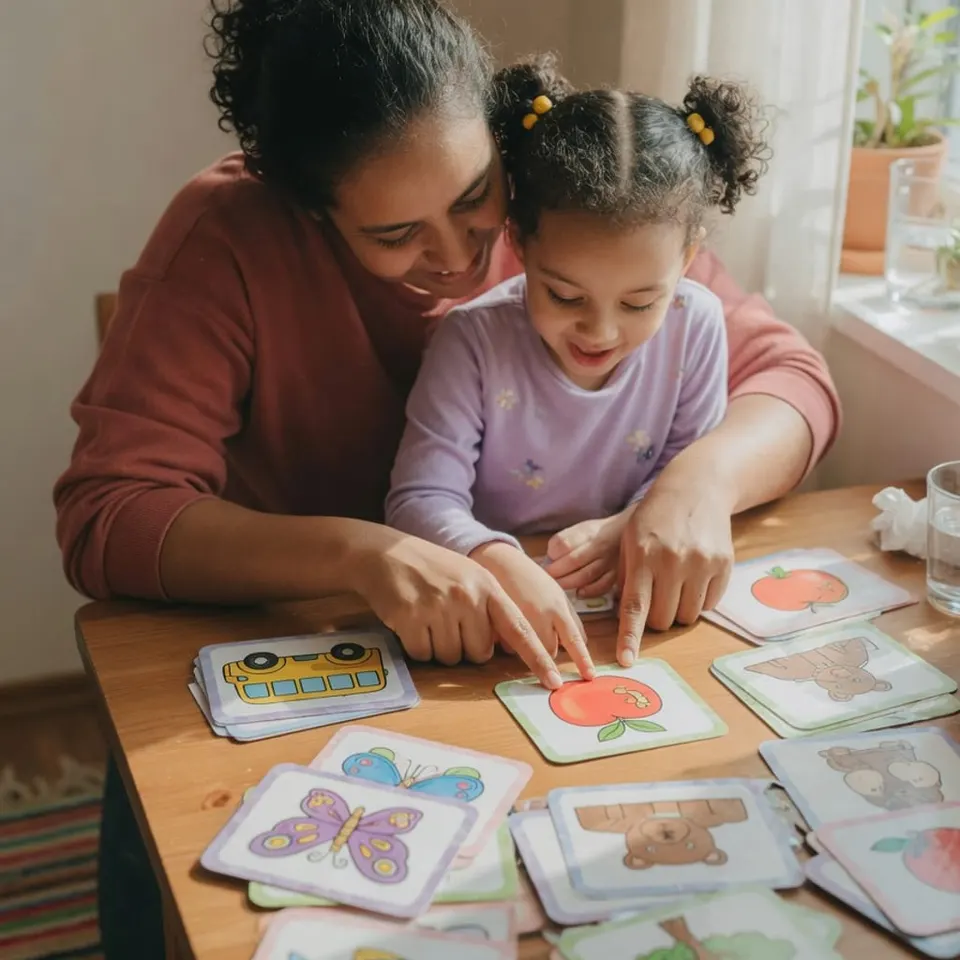
- Point to pictures in books and say "Look! A dog!"
- When you want something, point and say the name: "Let's get the ball."
- Play games like "Where's your nose?" and point to your own nose first.
- Use exaggerated pointing gestures to capture your child's attention.
4. Consider a Hearing and Vision Check
Uncorrected vision or hearing problems can affect pointing. An audiologist can test hearing, and an optometrist can evaluate vision. These are quick, painless tests that can rule out sensory issues.
5. Seek a Developmental Pediatrician or Child Psychologist
If your child has other delays or if you suspect autism, a specialist can provide a comprehensive evaluation. They can diagnose autism as early as 18 months in some cases. An early diagnosis opens the door to therapies that improve outcomes.
🔗 Related reading: ABA Therapy Cost in New Jersey: A 2025 Guide · Get ABA Therapy
What About ABA Therapy?
Applied behavior analysis (ABA) therapy is one of the most researched and effective interventions for children with autism. It focuses on teaching communication, social, and daily living skills using positive reinforcement. If your child receives an autism diagnosis, ABA can help them learn to point, use words, and engage with others.
How ABA Therapy Teaches Pointing
Board-certified behavior analysts (BCBAs) design individualized programs. For a child who isn't pointing, a therapist might start by prompting the child to point to a preferred toy, then rewarding the attempt. Over time, the child learns that pointing gets them what they want - and that it's a fun way to share. ABA breaks down pointing into small steps and practices it in natural play settings.
Insurance and Cost
ABA therapy is typically covered by private insurance plans and state Medicaid programs when there is an autism diagnosis. Many insurers are required to cover ABA under mental health parity laws. Medicaid covers ABA in most states, though coverage details vary. Before starting therapy, verify your benefits. If you don't have a diagnosis yet, early intervention services are often free or low-cost.
Common Mistakes to Avoid
When you're worried, it's easy to fall into unhelpful patterns. Here are some pitfalls to avoid:
- Waiting too long: "He'll grow out of it" is not a safe bet. If your child is missing milestones, early intervention is key. Don't wait until age 3 or 4.
- Forcing or pressuring your child: Demanding "Point!" repeatedly can create frustration. Instead, model pointing in a playful, low-pressure way.
- Dismissing your own observations: You know your child best. If you sense something is off, pursue answers even if others minimize your concerns.
- Ignoring other red flags: A lack of pointing combined with no words, no eye contact, or no pretend play is more concerning than pointing alone.
- Not using available resources: Programs like Early Intervention, speech therapy, and ABA are there to help. Our free matching service can connect you with vetted BCBA-led providers who understand your child's needs.
When to Seek Help - And How We Can Help
If your 2-year-old is not pointing, especially if they also have a limited vocabulary (fewer than 50 words by 24 months), don't use gestures, or have other developmental delays, it is wise to seek a professional evaluation. Early intervention can change your child's developmental path.
Free Matching With ABA Providers
If your child is diagnosed with autism and ABA therapy is recommended, finding the right provider can feel overwhelming. That's where Apply for ABA comes in. We are a free referral service that helps families like yours find high-quality, BCBA-led ABA therapy providers in your area. We consider your insurance, location, and your child's unique needs. You can fill out a simple form and get matched quickly - no cost, no obligation.
You don't have to navigate this alone. Whether you're just starting to have questions or you're ready to act, support is available. Reach out to your pediatrician, contact Early Intervention, and when the time comes, let us help you find the right ABA team for your child.